The Color Oracle uses colors as oracle. You intuitively choose a color, and the reading explains what that choice reveals about your current energy, needs and life phase. It is an accessible, almost playful divinatory practice that builds on the psychological and spiritual symbolism of colors — from Goethe's color theory through Jungian psychology to the chakra tradition.
Why colors speak about us
Colors have symbolic meanings in every culture — and these overlap surprisingly strongly. Red is almost everywhere connected with energy, love or danger; blue with calm, depth or spirituality; green with growth, nature, health. The universality of these associations has two roots: biological (red color = blood, fire; blue color = water, sky) and cultural (colors have acquired ritual meanings across millennia).
The Color Oracle works on this double level. When you spontaneously reach for purple this morning — as clothing, as a note, as a screen background — that says something about your current energy. Purple is classically the color of spirituality, transformation, transitional phases. You do not choose this color by chance — your inner system chooses it because it needs that energy. The Color Oracle makes that unconscious choice conscious.
What the main colors say
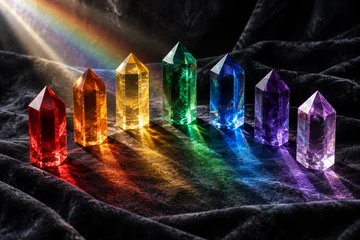
Red: energy, passion, action, sometimes anger or danger. You currently need drive or have a strong impulse. Orange: joy of life, creativity, social warmth. You are looking for connection and self-expression. Yellow: clarity, optimism, intellect. You want to understand and communicate. Green: growth, healing, balance. You need rest and renewal. Blue: depth, calm, truth, communication. You want to go inward or speak authentically.
Indigo: intuition, inner vision, mysticism. You are in contact with your inner voice. Purple/violet: spirituality, transformation, dignity. You are going through a meaningful inner change. Pink: gentle love, compassion, self-care. You long for tenderness. White: purity, beginning, clearing. You need a fresh start. Black: protection, depth, mystery, sometimes grief. You are integrating something difficult. Gray: neutrality, transition, reflection. You are in an in-between phase. Brown: grounding, stability, pragmatism. You need contact with the ground.
How to use the Color Oracle
- Choose intuitively, not analytically. Look at the color palette and take the first color that "draws" you — not the one you would logically choose. The unconscious speaks most clearly in the first second.
- Use the color throughout the day. When the oracle identifies green, wear something green or look consciously at green plants, a green screen background. That amplifies the effect of the chosen energy.
- Notice which color you often reject. What you do not like is often what you need — the color of your shadow. Whoever chronically rejects red often has a suppressed energy side. Whoever avoids black shies away from depth.
- Combine with your moon calendar or daily horoscope. When the color energy today harmonizes with the astrological day energy, you have a particularly powerful day. When they grate, learn something new — the two voices tell you different things, and both are true.
FAQ
Does the Color Oracle have to do with chakras?
Indirectly. The seven-chakra tradition from Hindu yoga assigns a color to each of the seven main chakras: red (root), orange (sacral), yellow (solar plexus), green (heart), blue (throat), indigo (third eye), violet (crown). The Color Oracle takes this assignment into account — when you choose a particular color, that can also indicate which chakra is currently active or in need.
Does the Color Oracle work for color-blindness too?
Only to a limited degree. People who are red-green colorblind cannot intuitively perceive the full color palette. An adaptation would be possible (selecting by color name rather than visual palette), but the app uses visual color choice. If you are affected and still want to use the oracle, you can have a sighted person name the colors and consult the meaning — the reading of the chosen color works just the same.
Which tradition stands behind the color meanings?
A synthesis of several sources: Goethe's color theory (1810) for the psychological effect, Faber Birren's color psychology (1950s) for cross-cultural symbolism, Jungian psychology for the archetypal reading, chakra tradition for the spiritual layer, modern color psychology from marketing and therapy. This mixture makes color readings multi-layered — no single tradition is enough; together they yield a rich picture.
How does the Color Oracle differ from the <a href="/orakel/glucksorakel">Luck Oracle</a>?
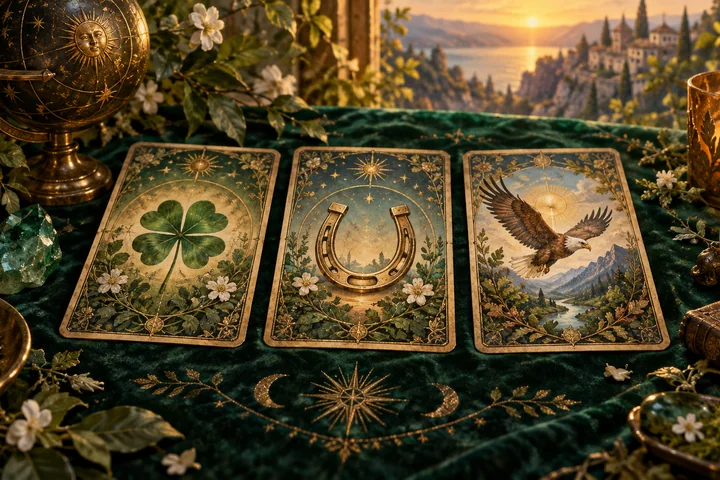
The Luck Oracle works with symbols (clover, horseshoe, ladybug) and a narrative luck reading. The Color Oracle works with colors and an atmospheric, energetic reading — no story but a mood. Both are low-threshold and color the day, but the Color Oracle is less narrative, more meditative. Whoever draws both in the morning gets symbol and atmosphere.
Related