Horoscopes
Online Horoscopes
All free horoscopes: Western daily, Chinese, Mayan, Egyptian, Japanese and Tibetan horoscope. Six astrological traditions in one place.
Cosmic Daily Reading
Select your sign, a day and the area you want to explore. You can add a name to accompany the question. The application generates a themed …
Daily Horoscope
Select a zodiac sign and one of the available days. The application displays an AI reading organised into areas of life.
Egyptian Horoscope
Explore the deity associated with your date in this version and use its image to open a personal reading, with an example and a question.
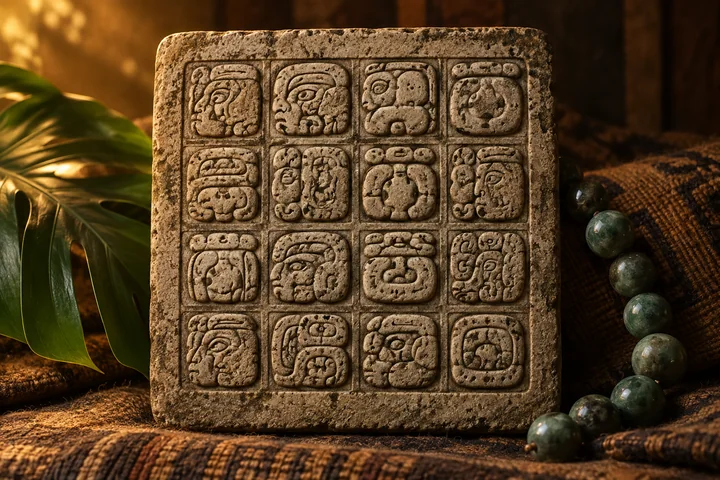
Mayan Horoscope
Find your Tzolk’in day’s number and name, accompanied by a symbolic reading with its own example and reflection question.
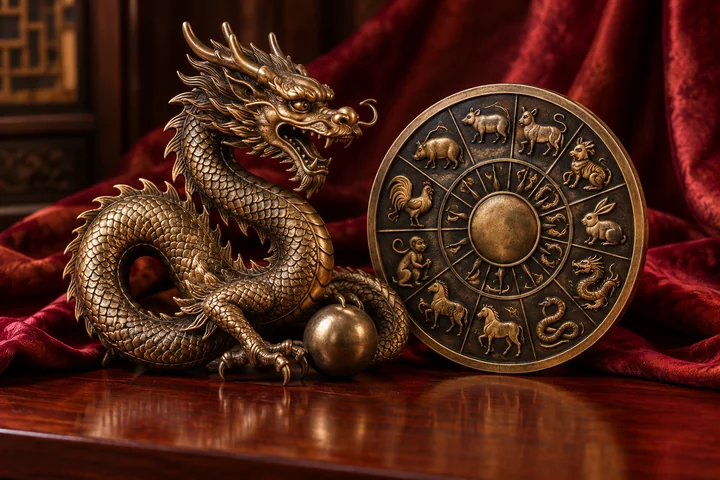
Chinese Horoscope
Discover your Chinese year’s animal and element, then explore their imagery through examples for your own reading.
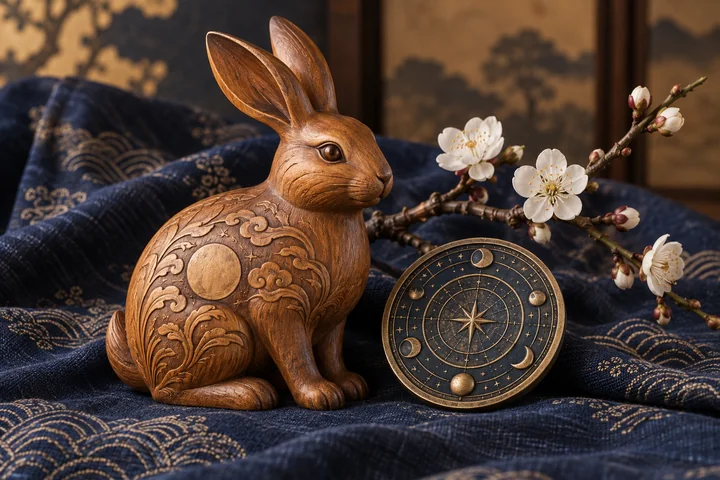
Japanese Horoscope
Explore your Japanese eto animal together with its element and polarity, using images and questions to consider their nuances.
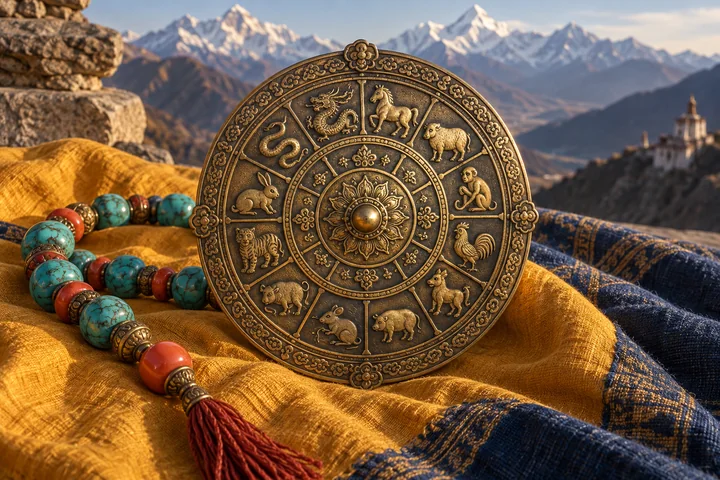
Tibetan Horoscope
Find your animal, element, polarity and annual Mewa, then explore the reading through examples that leave room for reflection.
Your Four Pillars · BaZi
Year, month, day and hour: explore your Chinese Four Pillars chart.
Your Lunar Nakshatra
Discover your birth lunar mansion, its symbol and the nuances of its pada.
Nine Star Ki
Your natal number and nine stages of your yearly cycle, on an explorable board.
Daily Panchanga · Your Vedic day
Five elements of the Vedic calendar, with times for your location.
Every culture that watched the sky built a horoscope. The Western daily horoscope is the one most people know — twelve signs, sun-based, on every magazine page. But the Chinese have read twelve animals on a 12-year cycle for over two millennia. The Maya read 13 day-signs in the Tzolkin calendar. Egypt, Japan and Tibet each developed their own systems. This hub gathers six of these traditions in one place, so you can read your moment through more than one cultural lens.
Horoscope is not the same as astrology
A common confusion: people use "astrology" and "horoscope" interchangeably, but they are not the same thing. Astrology is the technical system — calculating natal charts, reading planetary aspects, interpreting houses, doing the actual mathematics of the sky. The astrology hub covers that. A horoscope is the popular surface — the simplified daily, weekly or yearly reading derived from one element of the larger system (usually the sun sign). The horoscope is what you encounter in newspapers and apps. The astrology is what generates it.
This is why the same person can find astrology profound and horoscopes useless: a sun-sign-only reading covers maybe 8% of an actual chart. The horoscope is not lying — it is just radically simplified. Within its limits, it is useful: a daily mood-check, a quick orientation, a cultural ritual. The error is taking it for more than it is. Used as a full reading of your life, the horoscope disappoints. Used as a daily orientation among many, it earns its place.
Different cultures, different time-frames
The systems differ in what they read. The Western daily horoscope uses 12 zodiac signs on a roughly 30-day cycle (the sun moves through one sign per month). The Chinese horoscope uses 12 animals on a 12-year cycle — your animal is determined by your birth year, not your birth date. Born in 1990? Year of the Horse, regardless of season. The Maya horoscope uses 20 day-signs and 13 numbers in the Tzolkin sacred calendar, generating a 260-day cycle in which your "Maya day-sign" depends on your exact birth date.
These different time-frames mean different cultures answered different questions. The Western system is good at monthly variation; the Chinese system is good at generational character; the Maya system is good at spiritual day-energy. The Egyptian horoscope assigns gods to birth periods and is useful for archetypal reading. The Japanese and Tibetan systems blend animal cycles with elemental phases. Reading yourself through more than one system is not redundancy; it is triangulation.
Which horoscope for which need
- Daily mood and orientation: the Western daily horoscope. It is shallow but quick — a one-minute read for the energetic flavor of the day. Use it as a morning anchor, not as a basis for decisions. If you want depth, calculate your full natal chart instead.
- Yearly arc and life-phase: the Chinese horoscope. The 12-animal cycle is long enough to read major life phases. Your animal year — every 12 years — is traditionally a year of intensity and consolidation, often where the big decisions land.
- Archetypal and spiritual identity: the Maya and Egyptian horoscopes. Both assign you a deeper figure (a Maya day-sign, an Egyptian god) that reads as inner pattern rather than weekly weather. Useful for self-knowledge questions, less useful for daily decisions.
- Cultural identity and curiosity: the Tibetan and Japanese horoscopes. These work as windows into how other traditions imagine the human in time. Read them less as predictions, more as cross-cultural mirrors.