Mancy
Mancy and Divination Arts
Eight ancient divination arts online: coffee reading, pendulum, alomancy (salt), candle reading, dice, capnomancy (smoke), dominomancy and shell casting.
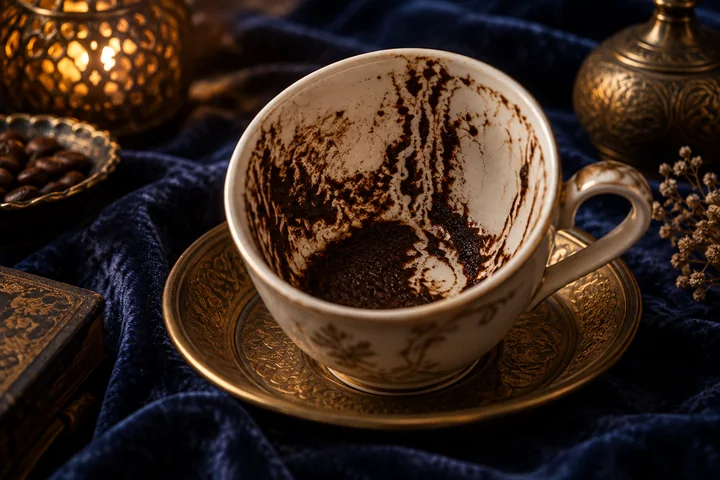
Coffee Reading
The application chooses three different symbols from a catalogue of 30 and places them in an animated cup.
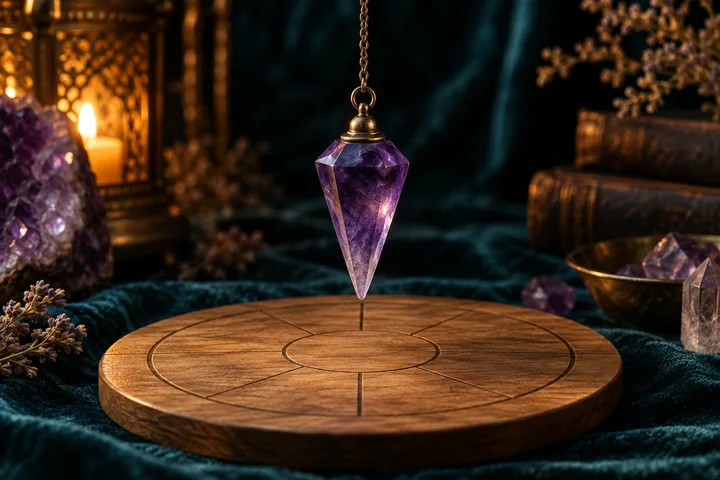
Pendulum Yes/No
The pendulum randomly selects yes, no or maybe and represents the result through its movement.
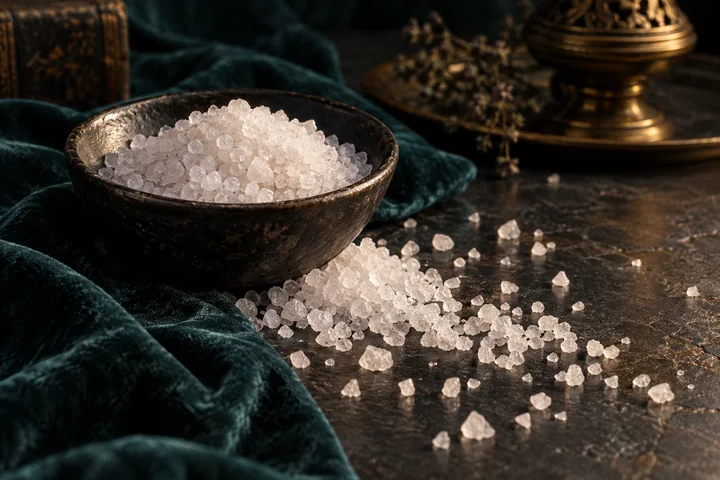
Alomancy
Watch the salt fall into one of this application's 12 patterns.
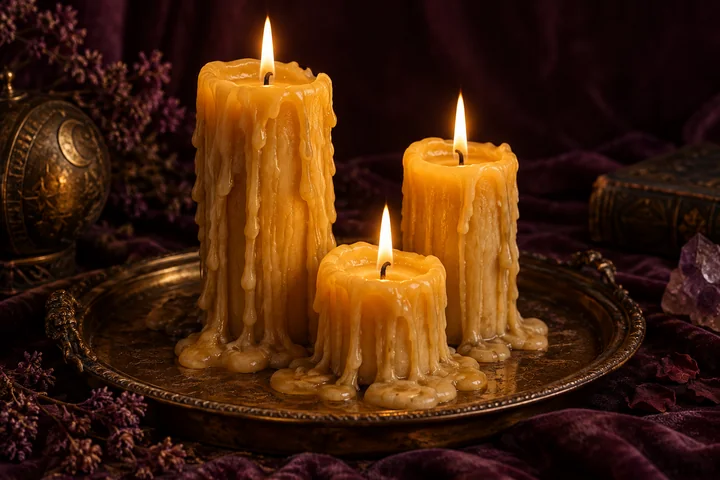
Candle Reading
Light the animated candle and observe one of the catalogue's 14 behaviours.
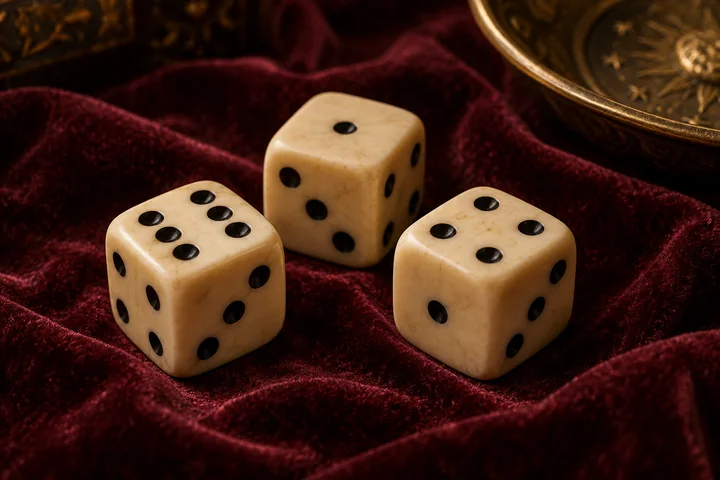
Dice Divination
Choose a roll of one, two or three six-sided dice.
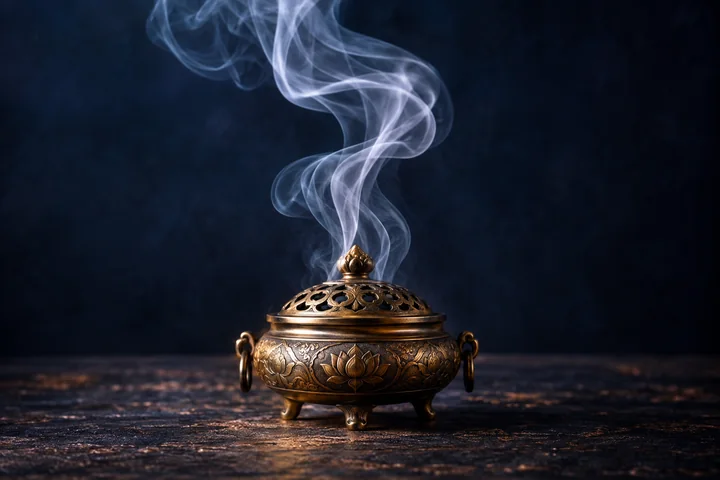
Capnomancy
Watch an animation of one of the catalogue's 17 smoke phenomena.
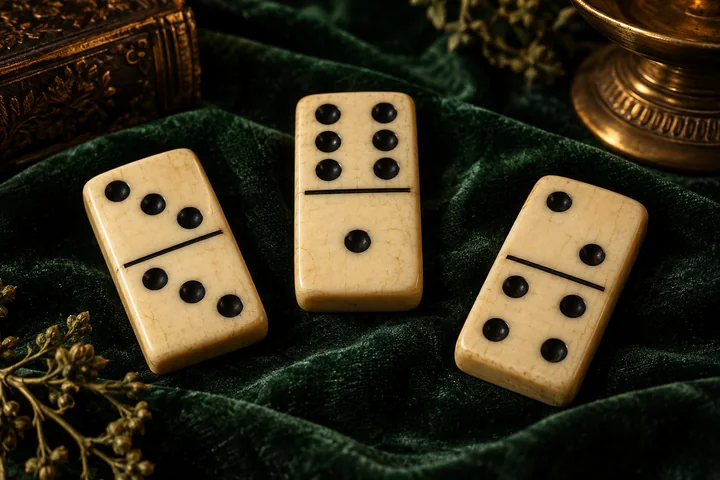
Dominomancy
Choose one or three different tiles from a 28-piece domino set.
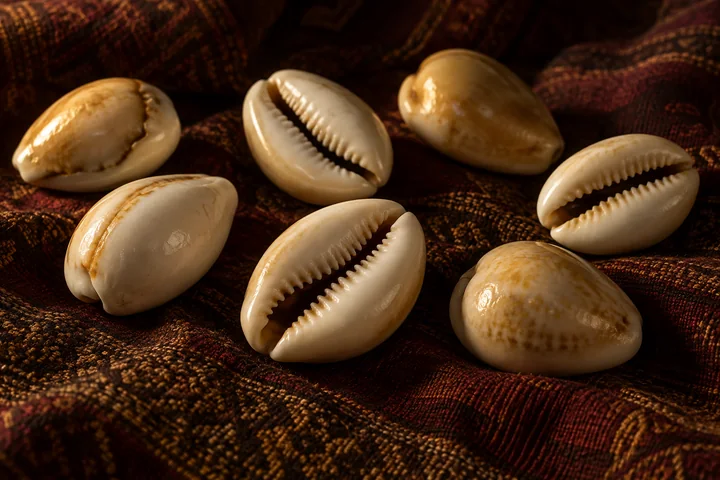
Shell Casting
Cast three different shells from a catalogue of 16.

Dream Interpretation
Explore your dream with AI using what you remember and how you felt. Get a personal reading and save the account with your notes, without s…
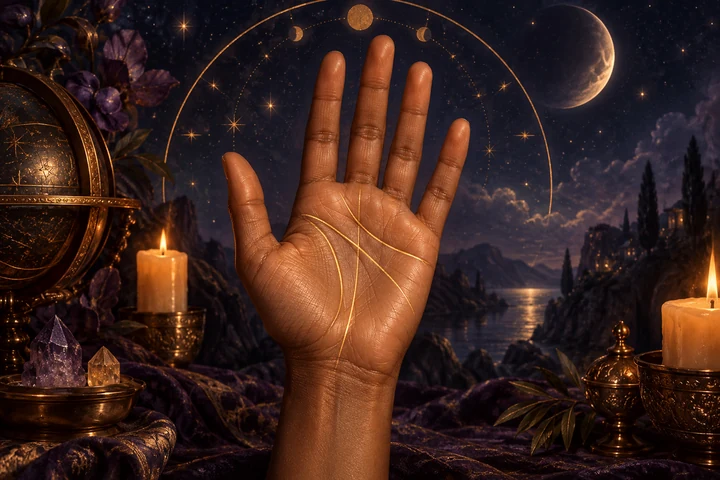
Interactive palm reading
Compare your palm lines with the illustrations and explore a reading of their combination.
Bibliomancy
Open the Book of Thresholds. An original passage and its reading offer another way to view your situation.
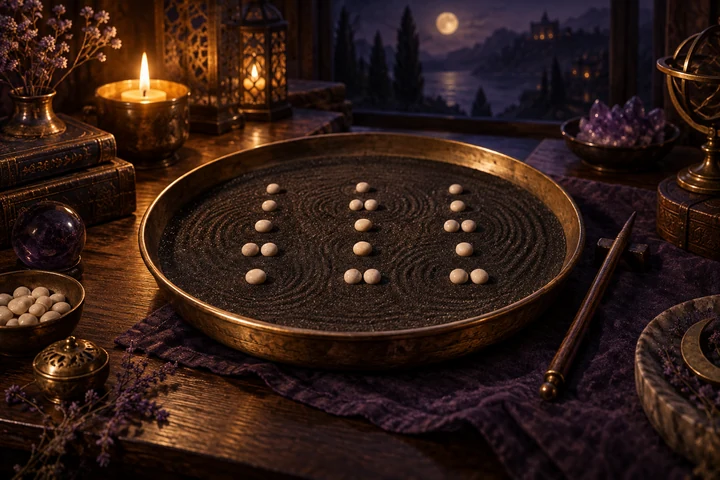
Geomancy
Cast points, form the sixteen figures and discover the combined reading of your geomantic shield.
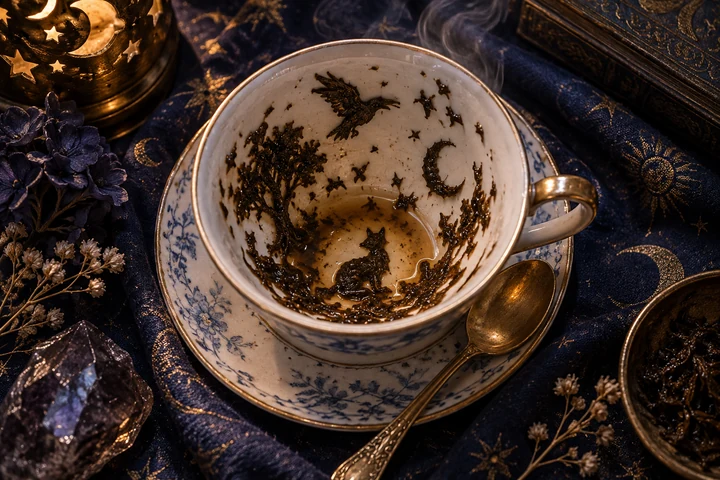
Tasseomancy · Tea Leaf Reading
Choose the shapes you recognize and where they appear in the cup.
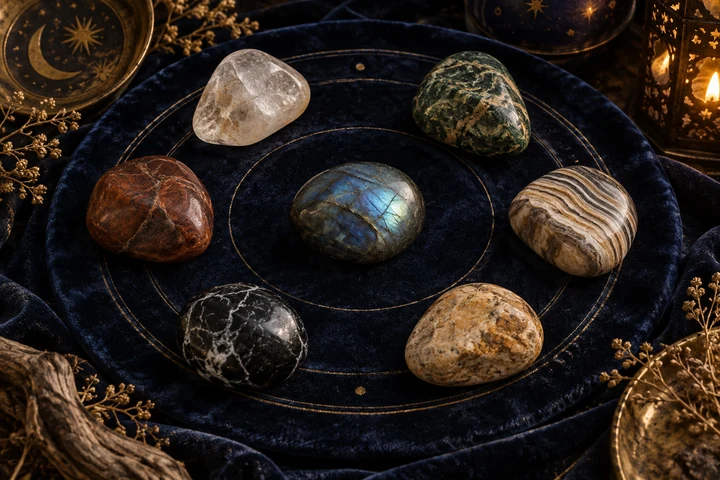
Lithomancy · Stone Reading
Seven stones in a circle. Position and proximity shape the reading.
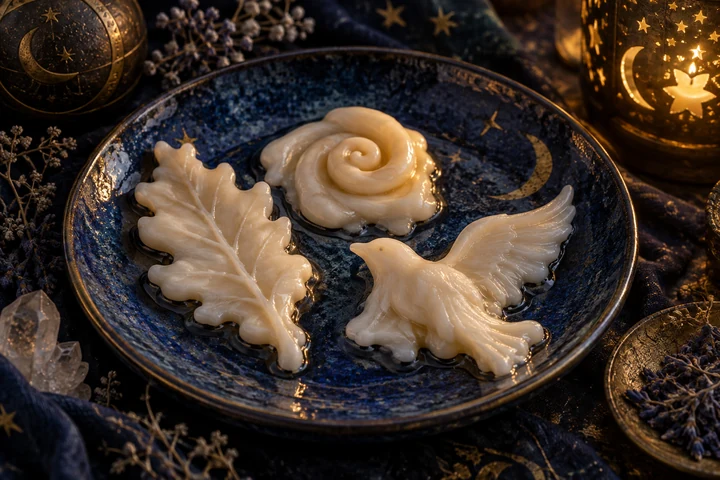
Ceromancy · Wax Shapes
A silhouette gallery to interpret the shapes that catch your attention.
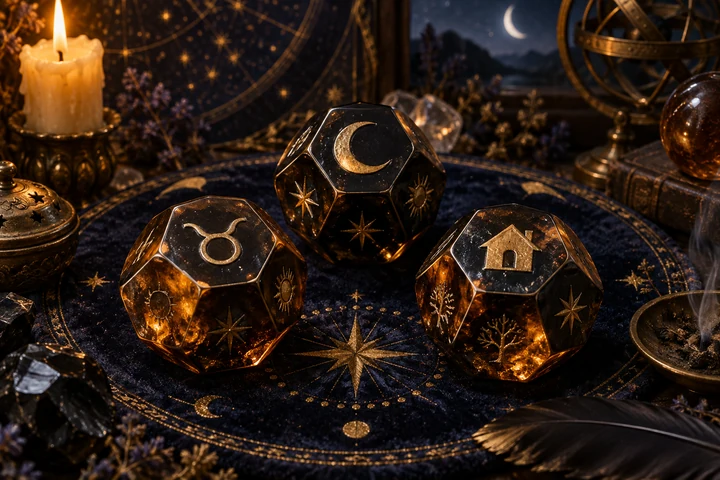
Astrology Dice
A planet, a sign and a house. Three dice join in one answer for your situation.
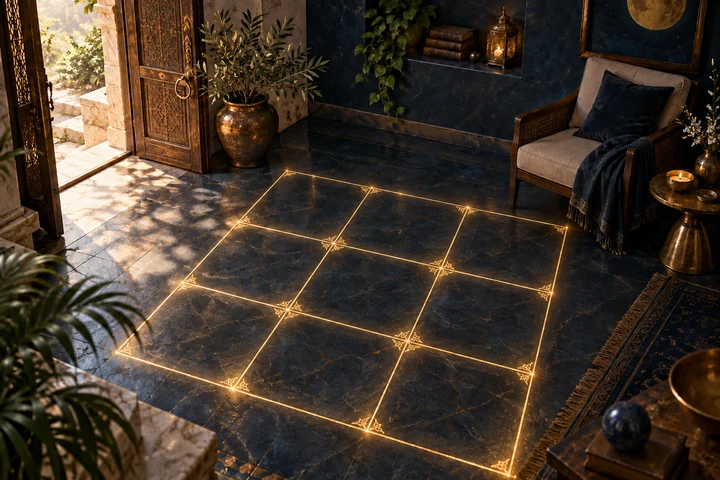
Feng Shui for Your Space
Sketch a room, mark its entrance and explore nine zones with suggestions for your goal.
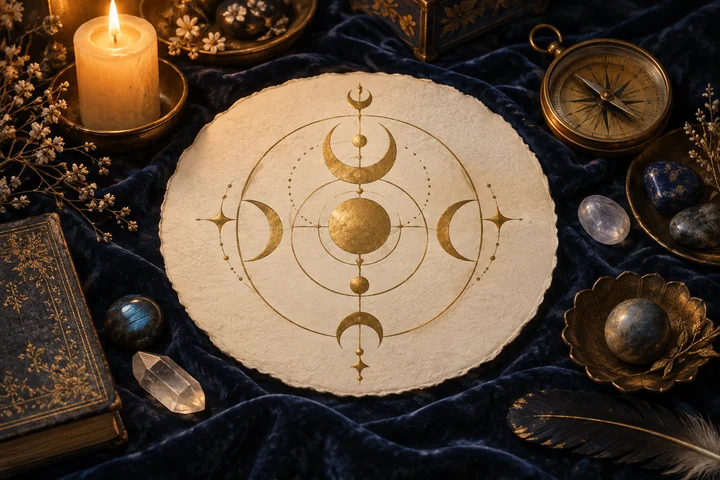
Create your personal sigil
Turn the letters of an intention into your own symbol. Change its composition, adjust the strokes and download your design.

Create your intention ritual
Choose a purpose, a few minutes and a symbolic element. Create a simple practice and pair it with a concrete action in everyday life.
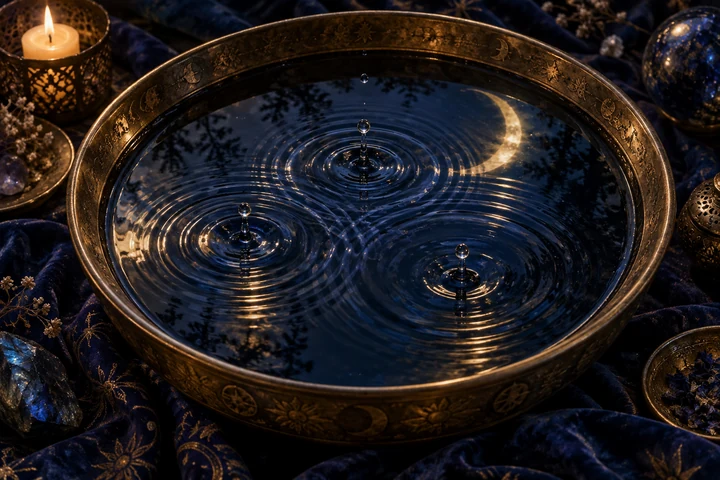
Hydromancy · Reading the water
Drop three droplets and explore what their meeting ripples suggest.
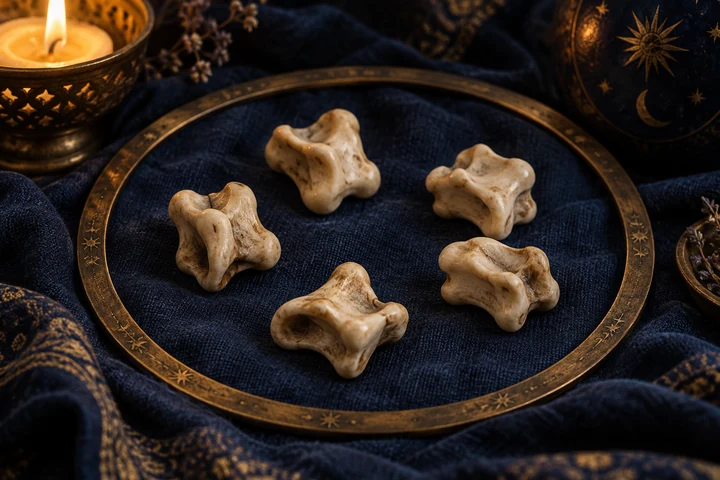
Astragalomancy · Knucklebone oracle
Cast five knucklebones and discover the opportunity, challenge and next step suggested by their combination.

Ornithomancy · The flight of birds
Watch birds gather and move apart. Their flight shapes your reading.

Nephomancy · Cloud reading
Three skies, the shapes you recognise and a symbolic reading of their evolution.
Before there were tarot cards or astrological charts, there were the mantic arts — the oldest divinations, in which humans read meaning in the patterns of the world itself. Coffee grounds in a cup. The swing of a pendulum. The shapes of cast salt. The flicker of a candle flame. The fall of dice or dominoes. The smoke of incense. This hub gathers eight of these ancient practices, each with its own logic, each rooted in something pre-symbolic: synchronicity, attention, the simple discipline of reading what is in front of you.
Mancy — reading patterns in the world
The Greek suffix -mancy means divination, and its surviving forms point to what is being read. Capnomancy: smoke. Alomancy: salt. Dominomancy: dominoes. The principle behind all of them: the world produces small random events constantly — coffee settling, a candle burning, dice falling — and a trained eye can find pattern where the untrained eye sees only noise. This is older than tarot by thousands of years. It predates writing.
What distinguishes mancy from oracles: there is no fixed deck or vocabulary. The shapes you see in coffee grounds depend on the cup, the moment, your attention. This makes mancy more intuitive and less reproducible than card oracles. The strength: the practice trains your perception. The risk: without a tradition to ground the reading, you can see anything in anything. The classical mantic arts each developed conventions over centuries to keep the readings honest.
Synchronicity — the principle that holds it all together
Carl Jung gave the modern word for what the mantic arts had always assumed: synchronicity — the idea that two events can be connected by meaning even when not connected by cause. Coffee grounds settle through pure physics; the pattern they form has no causal link to your life. But the moment you read them — your question in mind, your attention focused — the pattern becomes a mirror. Whether you treat this as objectively meaningful or as a perceptual exercise, the practical effect is the same: the act of reading produces insight.
This is why the pendulum works without supernatural assumptions. The micro-movements of your own muscles, below conscious threshold, swing the pendulum in a direction that matches what some part of you already knows. The pendulum becomes a readout of your unconscious. The same mechanism explains dice divination and dominomancy: the random event provides the medium; you provide the meaning. Neither the medium alone nor the meaning alone is enough. The combination is the practice.
Which mancy for which mood
- For calm, contemplative questions: coffee reading or candle reading. These require sitting still for several minutes — the slowness is part of the answer. Suited to evenings, to one-on-one questions, to moments when the issue needs softening rather than sharpening.
- For decisive, binary moments: the pendulum. Pose the question, hold the pendulum, read the swing. Two minutes. The pendulum is unbeatable when you need a yes-or-no and your conscious mind is too noisy to give one cleanly.
- For social or playful moments: dice divination or dominomancy. Less weighty, less ritualistic, more conversational. Many traditions used these among friends or in small groups. Suited to questions that are real but not crisis-grade.
- For ancient, ritual-heavy practice: alomancy (salt) or capnomancy (smoke). These require setup — a fire, a cast, careful observation — and reward you for the setup. When you want to mark a moment as important and slow time down deliberately, these are the right forms.