Das Würfelorakel enthüllt, was der Zufall verbirgt
Wähle deinen Wurf
(optional)
Die Würfel rollen…
Deine Lesung
✦
Gesamtsumme0
🔮Deutung
☽
Choose a roll of one, two or three six-sided dice.
Enter the language of the oracle: each shape opens a path and each contrast invites another look.
The reading and its nuances
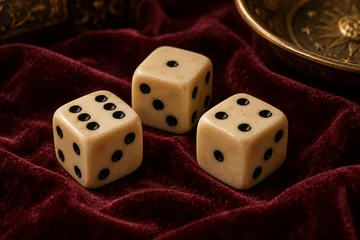
Dice offer two layers: the value or total and, with three dice, a sequence of positions. Distinguish the combined theme from each die's contribution rather than treating them as three unrelated answers.
An example reading
A roll of 1, 2 and 3 totals 6. Read the total's interpretation first, then the past, present and future details in that order. An example thread might connect initiative, encounter and expression without replacing the text assigned to the total.
How this consultation works
Choose a roll of one, two or three six-sided dice. The reading uses the face value or total and, with three dice, adds past, present and future details; every die counts. The optional question does not change the random result.
FAQ
Are any dice discarded, or must they land inside a circle?
No. This interface counts every selected die, from one to three, and uses the value or total. It applies no discard rules or landing zones absent from the display.
How can I focus the consultation?
Choose one subject and a clear question. If the tool has no question field, keep it as a personal reference. Connect the symbol with a specific situation and note both what fits and what remains open.
Can a new consultation give a different result?
Yes. A new draw may select different symbols. The same symbol, language and position keep their catalogue text; combinations also depend on the other pieces. The pauses accompany the experience without changing the meaning.
How can I connect the reading with real life?
Separate the symbol from what you know through experience. Use its contrast to ask a question or explore a possibility; examples illustrate a reading without certifying facts or fixing the future.
Can I keep the result and add notes?
Use Save reading once the result is complete. In My readings you can reopen it, add notes and download it as text. Data stays in this browser; use the library backup if you want to keep it when changing devices.