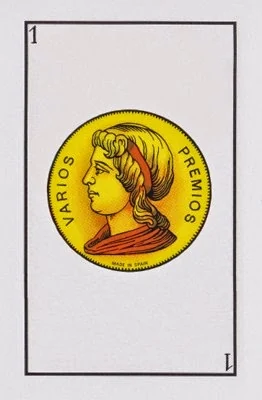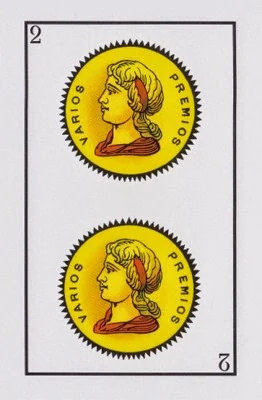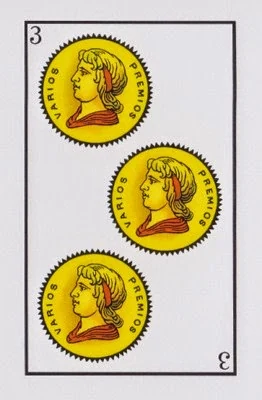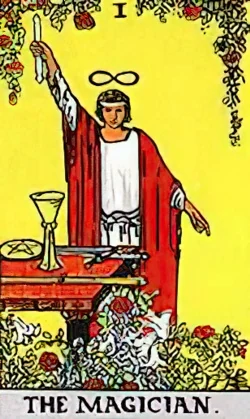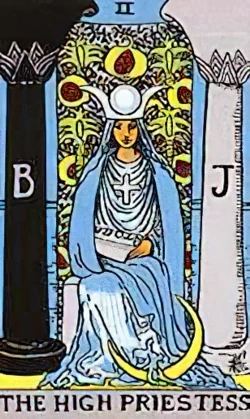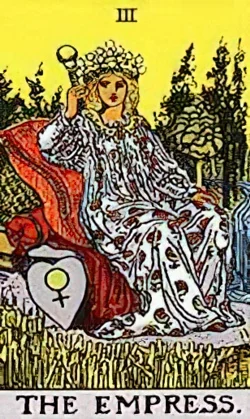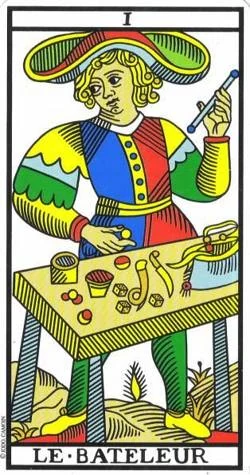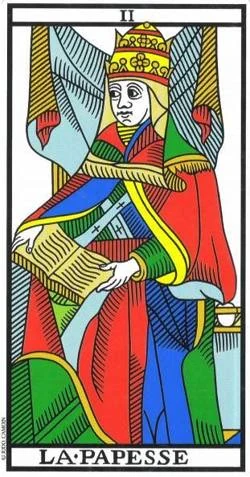
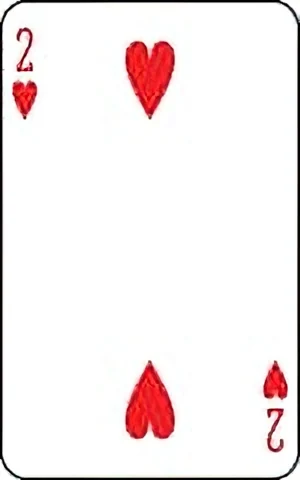
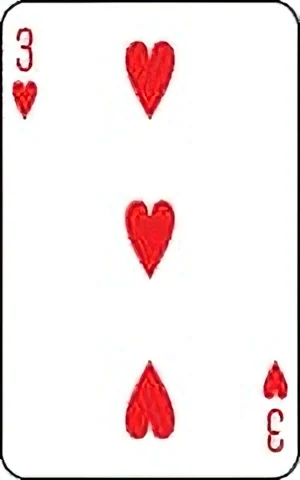
The Poker Tarot uses a card deck everyone has at home: the 52 playing cards plus two jokers. What sounds like a desperate workaround — "I do not have a real tarot deck, so I will use the poker cards" — is actually a tradition in its own right with roots in the 18th century. This app reads with the standard deck, in a methodically clean variant that maps each card to a tarot meaning and interprets across three cards.
How 52 playing cards become an oracle
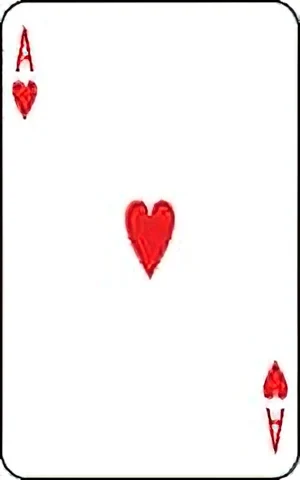
The mapping is not arbitrary. The four poker suits correspond to the four tarot suits: Spades <-> Swords (mind, conflict, clarity); Hearts <-> Cups (feeling, love, relationships); Diamonds <-> Pentacles (material, money, career); Clubs <-> Wands (will, initiative, energy). This mapping has been documented in French and English divination traditions since the 18th century.
The 13 values (Ace through King) follow a numerological logic: Ace = beginning, new possibility; 2 = polarity, choice; 3 = first manifestation; and so on through King = maturity, authority. The court cards (Jack, Queen, King) often mean concrete people in the querent's life, similar to classical tarot. The jokers are usually left out or read as "wild" cards that amplify any of the above meanings.
Step by step: a Poker Tarot reading
- Shuffle the deck (real or digital) while holding your question in mind.
- Draw three cards — the first stands for the past/background, the second for the present/main energy, the third for the tendency/near future.
- Read each card first by suit (which life area?) and then by number (which phase in the cycle?).
- Watch for suit concentrations: three Spades = conflict reading; three Hearts = love reading.
- Read the court cards as possible people: a Jack of Spades is a young person in a conflict; a Queen of Hearts an emotionally mature woman.
When Poker Tarot works especially well
- Travel emergency. You are on holiday, you have a pressing question, no tarot deck — but poker cards are everywhere. Poker Tarot is the divination of pragmatists.
- Quick daily question. Drawing one card in the morning to "What is my main theme today?" — Poker Tarot is more precise than a pendulum and faster than a 78-card reading.
- First tarot experience without investment. If you do not yet know whether tarot is for you, Poker Tarot offers a free entry practice — the mechanics are identical to classical tarot, only the imagery is more abstract.
- Together with skeptics. Whoever finds tarot too esoteric often accepts poker cards more easily — they are a "neutral" tool. A shared Poker Tarot reading with someone distrustful of traditional tarot can enable a serious reflection that the classical deck would not have produced.
FAQ
Is this not simply arbitrary? Poker cards are just playing cards.
Tarot cards also began as playing cards. The Italian tarocchi game (15th century) was played long before anyone used it as a divinatory tool. The split "tarot = mystical, poker = profane" is a modern construction. Both decks share the same ancestor (the Mamluk game). The poker cards are simply the simplified version: 52 instead of 78 cards, without the 22 Major Arcana. For many readings, that is enough.
Who spread Poker Tarot?
In the 18th-19th centuries it was above all the French school (Etteilla, Lenormand, later Papus) that systematized playing cards as a divinatory tool. In the English-speaking world, Florence Campbell with "Sacred Symbols of the Ancients" (1947) was a formative figure. In the 20th century, Mary Greer popularized the practice as a bridge between tarot and playing-card reading. Today, Poker Tarot has experienced a small renaissance through pandemic lockdowns (poker cards were everywhere, tarot decks sold out).
What do the spade cards mean in Poker Tarot?
Spades (corresponding to Swords in tarot) are the most difficult suit in a reading. They stand for conflict, separation, hard truths, mental stress, legal disputes. A reading with three spade cards is rarely pleasant — but it is informative. Spades are often read as "the suit of clarity": painful but freeing. The specific cards vary widely: Three of Spades = pain of separation, Eight of Spades = paralysis, Ace of Spades = very strong mental energy (can mean clarity or harshness).
Should I include the jokers?
Tradition recommends: include one joker as a "fate card" and leave the other out. When the joker falls, it counts as a rare, highly significant sign — a moment of fate, a wildcard, the intervention of a force outside the normal reading. Other schools leave both jokers out, because 52 is a harmonious number (4 x 13, with clear numerological structure). Both work; our app uses the variant with one joker.
Should I switch from Poker Tarot to real tarot if I want to go deeper?
If the tradition draws you — yes. The
Rider-Waite or
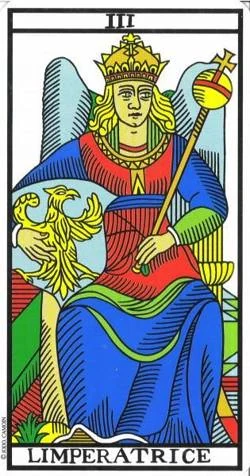
Marseille offers 22 additional cards (the Major Arcana) that depict archetypal life questions — something poker cards cannot do. On the other hand: many experienced readers stayed with the 52 poker cards their entire lives and found them sufficient. The switch is not an improvement but an expansion — both tools have their strengths.
Related