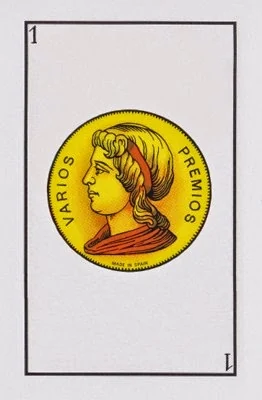
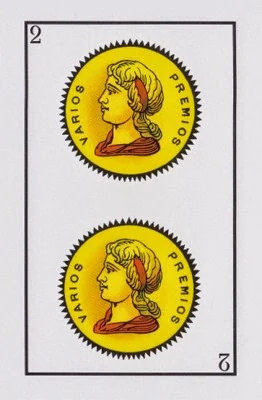
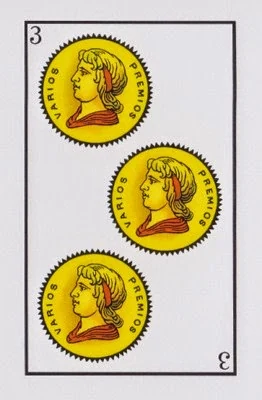
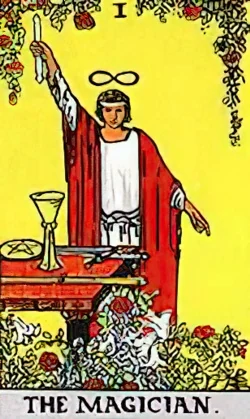
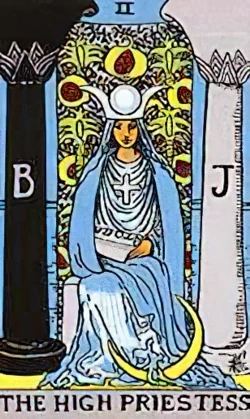
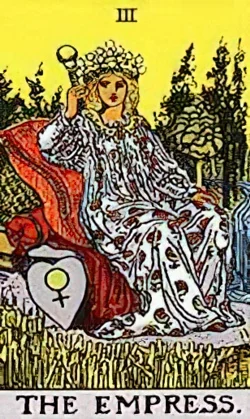
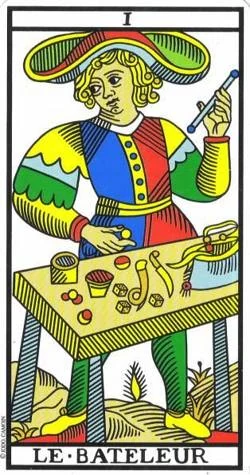
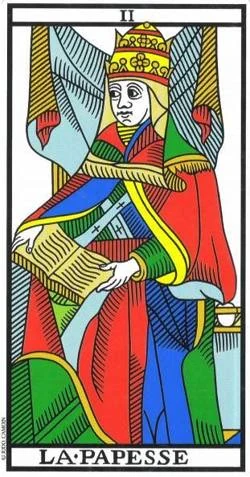
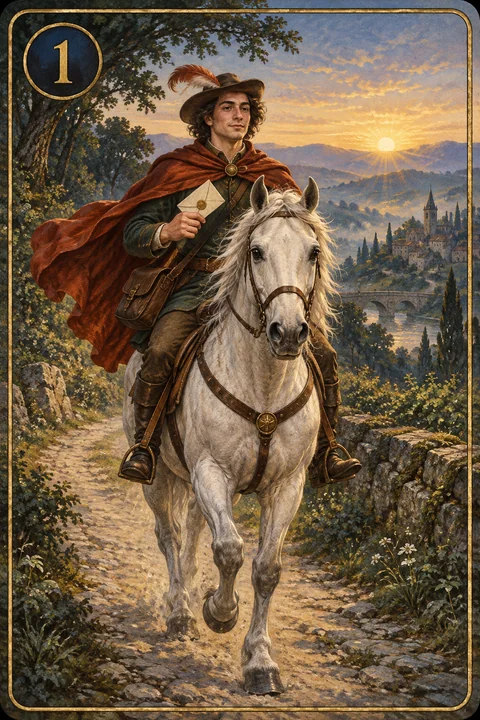
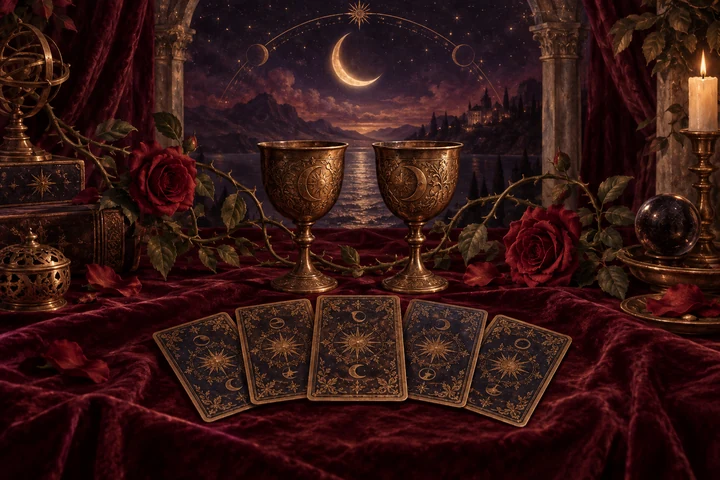
In Spain and Latin America, people play cards with a deck that has little to do with tarot — and it is precisely this deck with which the Spanish-speaking folk tradition has been questioning the future for centuries. The Spanish Baraja has 40 cards (sometimes 48) in four suits: Oros (Coins), Copas (Cups), Espadas (Swords) and Bastos (Clubs/Wands). This app uses the Baraja for divination — a more grounded, often more direct card reading than the esoteric tarot.
Playing cards as oracle — a folk tradition
Unlike tarot, designed from the start for several functions (game, symbolism, divination), the Spanish Baraja is first of all a pure playing card deck. Only after games such as Mus, Tute or Brisca had developed from it did fortune-tellers — especially in the rural traditions of Spain, Andalusia and Mexico — begin to reinterpret the cards. Each value (1 through 12) and each suit acquired a cartomantic meaning.
This double function — game and oracle with the same deck — gives the Spanish tradition a particular down-to-earth quality. Card divination with playing cards never seemed elite; it was folk knowledge, grandmother wisdom, Latin American market scene. That is reflected in the readings: concrete, everyday-relevant, without the hermetic superstructure that Western occult tarot drags along.
Four suits, four life areas
The suits of the Baraja correspond to classical life themes: Oros (Coins) stands for money, material, career, prosperity — like Pentacles in tarot. Copas (Cups) for love, feelings, relationships, family — the Cups. Espadas (Swords) for conflict, will, clarity, legal disputes — the Swords. Bastos (Clubs/Wands) for work, motion, initiative, journeys — the Wands. When many Oros fall in a reading, the question is material; many Copas, emotional.
Each suit has 10 numerical values (1, 2, 3, 4, 5, 6, 7, Sota/Page, Caballo/Knight, Rey/King) — in the 40-card variant, the 8 and 9 are missing. In the 48-card variant, they are included. The court cards often represent people in your life: a Sota Espadas is a young person with a conflict, a Rey Copas an older man of emotional depth. This personalization is a strength of Baraja reading.
How the Spanish Baraja reads
- Three-card past/present/future. The simplest reading. One card for each time layer. The middle card shows the current energy, the side ones the background and the tendency.
- Five-card cross for complex questions. Card 1 (center) = the question; 2 (left) = what helps; 3 (right) = what hinders; 4 (top) = conscious factor; 5 (bottom) = unconscious factor. Classic Latin American spread.
- Watch for suit concentrations. When three or more cards of the same suit fall, that life dimension is dominant. Three Espadas at once is a clear signal that conflict or clarification is in the foreground.
- Read in people when court cards fall. Sota, Caballo, Rey/Reina are often concrete people — ask yourself: who in my life fits this card? The Spanish tradition is highly personalized in this regard.
FAQ
Is the Spanish Baraja the same as the Italian tarot?
They share the same family tree — both descend from the medieval Mamluk game that came to Europe in the 14th century. The suits are nearly identical (Oros/Copas/Espadas/Bastos in Spanish, Denari/Coppe/Spade/Bastoni in Italian). What sets the Spanish apart: no Major Arcana (which were added later in tarot), often only 40 instead of 78 cards, different image conventions. The Baraja is essentially what is left of the Italian forerunner of tarot without the occult expansion.
Who were the most important Latin American Baraja readers?
The tradition is overwhelmingly oral and anonymous — grandmothers, village fortune-tellers, traveling card readers at markets. In the 20th century the Mexican fortune-telling tradition (with its own characteristic spreads) became better known, the Cuban line (often blended with Afro-Cuban influences) and, in Spain itself, the Andalusian school. Today Spanish tarot is having a renaissance through YouTube and TikTok — but most practitioners remain unknown, which is probably for the best.
Does the Baraja work if I do not speak Spanish?
Fully. The cards have universal meaning; the Spanish terms are only labels. This app reads the cards to you in English — the symbolism is cross-linguistic. What you lose without Spanish: access to the rich oral tradition (refranes, Latin American YouTubers, Andalusian folk books). For the reading itself, that is not necessary.
What is the difference between the 40-card and 48-card decks?
The 40-card deck (without 8 and 9) is the standard version in Spain for games like Mus or Tute. The 48-card deck (with 8 and 9) is more common in Latin America, especially Mexico. In divination, the 40-card deck is most often used — the missing 8 and 9 slightly alter the numerology of the reading (some practitioners say the 40 is "stricter" and "clearer", the 48 "softer"). Our app uses the 40 as standard.
Should I choose Baraja or <a href="/tarot/rider-waite-tarot-antwortet">Rider-Waite</a>?
If you want a grounded, everyday-suitable reading — Baraja. If you want the full symbolic depth of a 78-card tradition with Major Arcana — Rider-Waite. If you stand within the Latin American or Spanish folk tradition — Baraja, clearly. If you stand within the Central or Northern European esoteric tradition — Rider-Waite or
Marseille. Both are valid tools for different needs.
Related