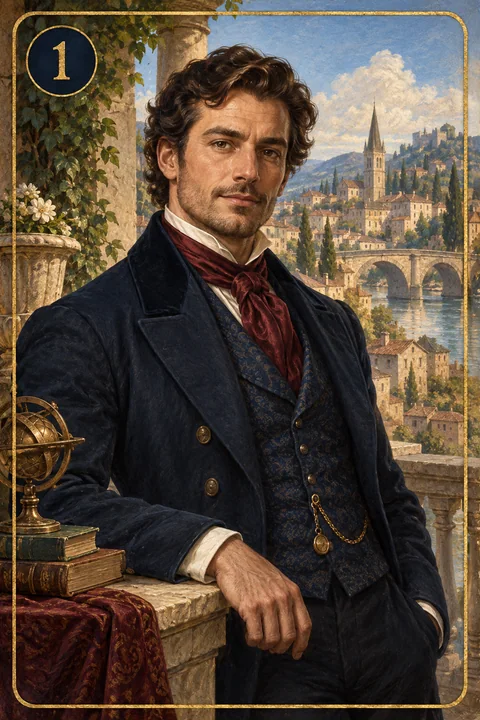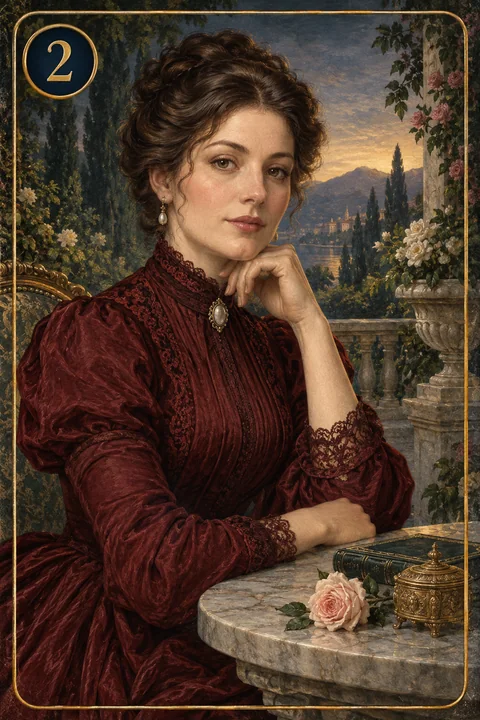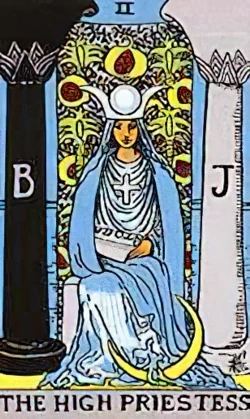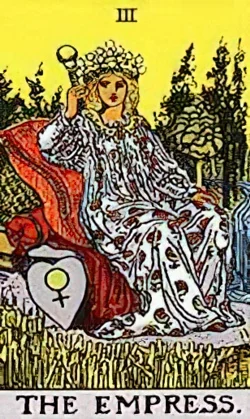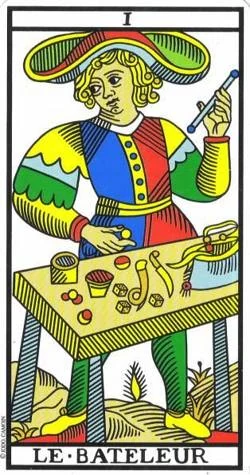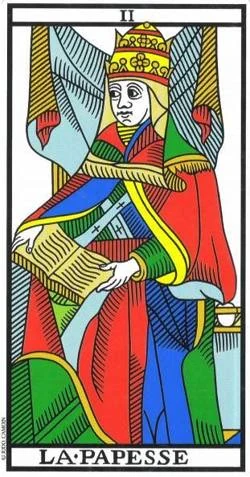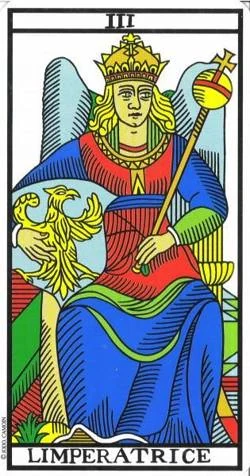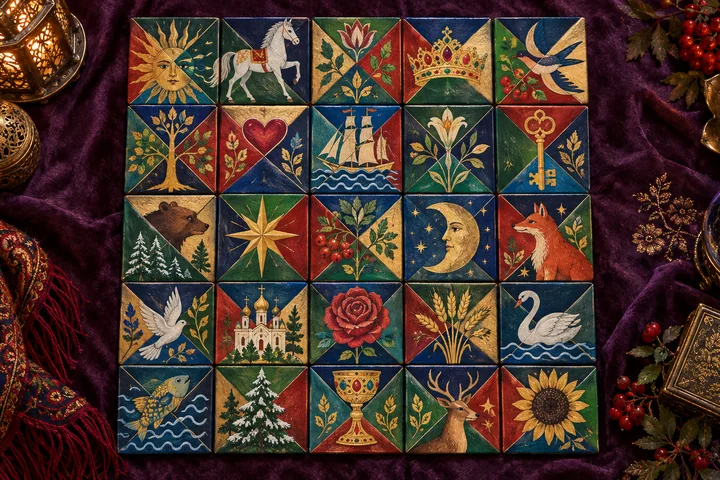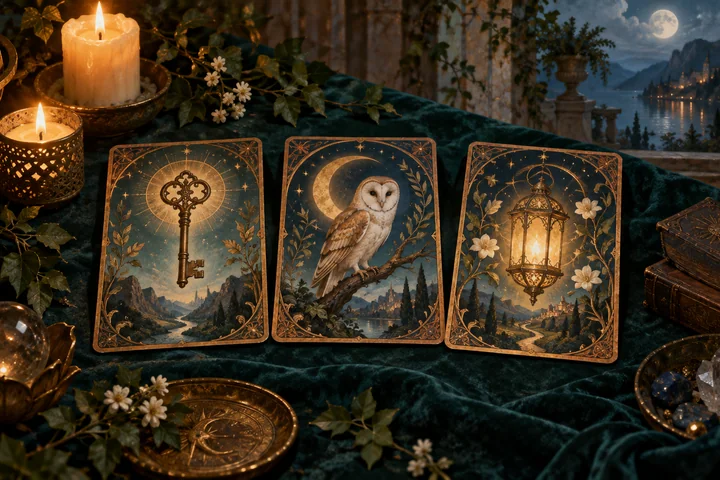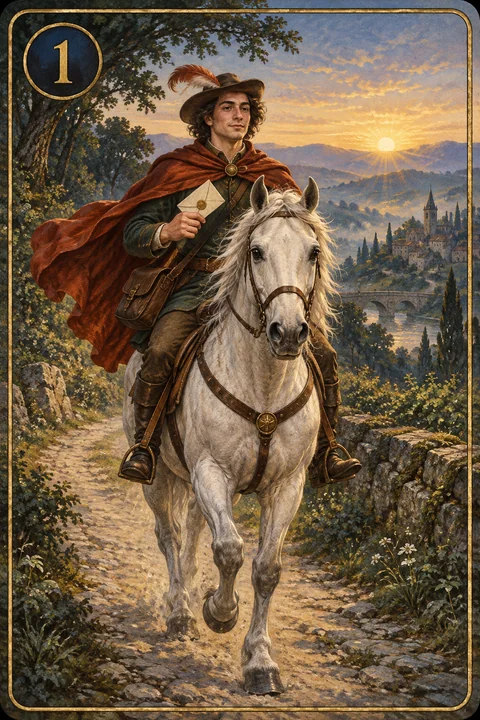
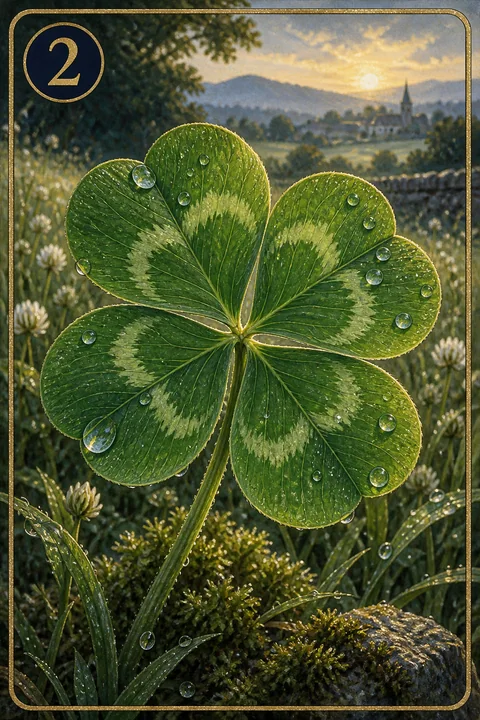
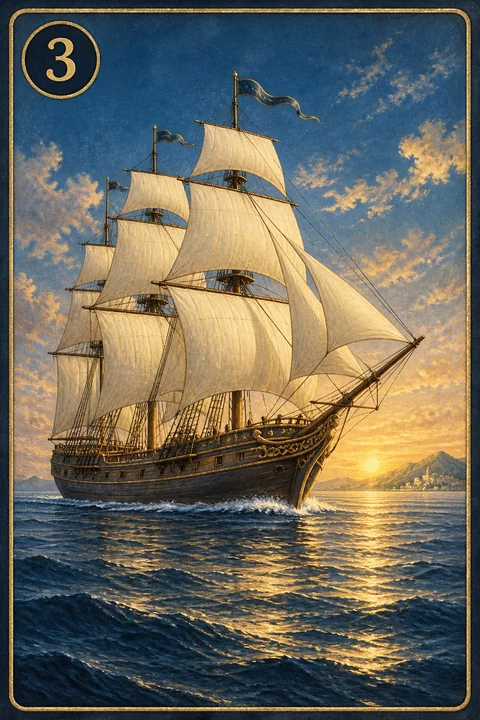
Strictly speaking, the Lenormand is not tarot. It is a separate card system with only 36 cards, distinctly different motifs (Anchor, Ship, Ring, Scythe, Moon) and a fundamentally different reading method. Where tarot works with grand symbols, Lenormand reads sentences from card combinations — like words joining into a statement. In Germany and Austria, Lenormand has been deeply rooted for 200 years; many grandmothers laid cards with it without ever using the word "tarot".
Mademoiselle Lenormand and her legacy
Marie Anne Adelaide Lenormand (1772-1843) was a fortune-teller at Napoleon's court in Paris — and so famous that after her death, publishers used her name for a card deck she herself had never designed. The current Lenormand deck was actually printed in 1846, three years after her death, in Germany (Leipzig, B. Dondorf publishing house) — based on an older game of luck called "Game of Hope" by Johann Hechtel. The cards spread from Germany throughout the German-speaking world, then back to France.
This German origin explains a lot: the Lenormand imagery is bourgeois-Biedermeier — Anchor, Letter, Book, House, Garden, Dog — not hermetic-occult like tarot. Lenormand readings are concrete, down-to-earth, often practical: When does the money come? Which person enters my life? Which aspect of work is in the foreground? It is the tool for the hand, not for meditation.
How cards become sentences
In tarot, each card means something significant on its own. In Lenormand, each card receives its full meaning only from its neighbors. The Scythe alone means sudden change, often painful. Scythe + Letter means sudden news that cuts something off. Scythe + Man means a man who decides something abruptly. It is a visual language that works through syntactic combinations — almost like a pictographic script.
The most famous Lenormand reading is the Grand Tableau: all 36 cards laid out at once (in a 9x4 or 8x4+4 arrangement), and the reader interprets the position of each card relative to the "personality card" of the querent (Man or Woman). It is a reading form that can occupy even an experienced practitioner for 30 to 60 minutes. Our app first offers the simpler 3-card and 5-card readings.
Using Lenormand correctly
- Ask concrete, short-term questions. Lenormand shines at "What is coming this week?" and "Which aspect of this situation is currently active?". It is less suited to deep philosophical questions — for those, tarot is better.
- Learn the 36 cards individually first, then the most common pairs. Anchor + Ship = a long stay ends. Ring + Coffin = a connection ends. Stars + Letter = positive news. There are about 50 key pairs that occur in 80 percent of readings.
- Pay attention to the personality cards. The Lady (card 29) represents the woman, the Gentleman (card 28) the man. In any reading about relationships, their positions relative to each other are often the main statement.
- Use Lenormand for timing questions. Unlike tarot, Lenormand can answer "when?" reliably. Specific cards signal time windows: Key and Stars point to soon, Ship to a journey or period, Mountain to delay.
FAQ
Is Lenormand easier to learn than tarot?
Yes and no. The 36 individual cards are learned faster than 78 tarot cards — the images are everyday (Key, Stars, Letter), the meanings direct. But the reading in combinations is more demanding than most tarot readings. Whoever reads tarot intuitively reads Lenormand methodically. Both paths are valid; they appeal to different people.
What is the difference between Lenormand and the <a href="/tarot/zigeuner-tarot-antwortet">Gypsy Tarot</a>?
Both are 36-card decks and share a similar tradition (Russian-German-Romani cartomancy of the 19th century). The imagery differs: Lenormand is bourgeois-Biedermeier (furniture, tools), Gypsy Tarot is romantic-folkloric (riders, lovers, figures). Methodically, both read in combinations, but the connotations differ. A German Lenormand reader does not naturally switch to the Gypsy Tarot — the decks have different moods.
What is the Grand Tableau and do I need it?
The Grand Tableau is the full layout of all 36 cards — the most demanding Lenormand reading. It delivers a life diagram showing several life areas (love, career, money, health, social sphere) simultaneously. Beginners do not need it — the 5-card line suffices for most everyday questions. After 6 to 12 months of Lenormand practice, when you are ready for a comprehensive yearly forecast or life analysis, the Grand Tableau is worth it.
Did Marie Lenormand actually use this deck?
She used a deck, but not this one. Mademoiselle Lenormand probably worked with the Etteilla deck (an 18th-century tarot variant) and with her own card systems, now lost. The "Lenormand" deck you are using here was named after her after her death for marketing purposes. Even so, the deck feels stylistically consistent with her era — and 200 years of practice have made it an independent, fully-fledged tool.
Does Lenormand work for spiritual or existential questions?
Only to a limited degree. Lenormand is a
this-world tool — it speaks of letters, journeys, relationships, money worries, health. For questions about life meaning, spirituality or destiny, the
Marseille tarot or the
I Ching is often more fitting, because their symbolism is more universally and deeply layered. Lenormand can also read existential questions, but it typically translates them into everyday images — which some prefer, others perceive as flattening.
Related