Marseille-Tarot

Entdecke, was die Karten dir offenbaren wollen

0/500

Wähle 3 Karten, die mit dir in Resonanz stehen

0/3 Karten ausgewählt

Interpretiere die Karten…

Deine Lesung

Try Marseille Tarot now for free. Online reading with AI interpretation in seconds, no signup required.

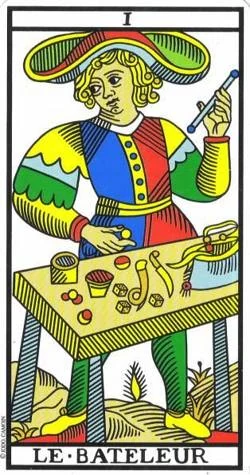
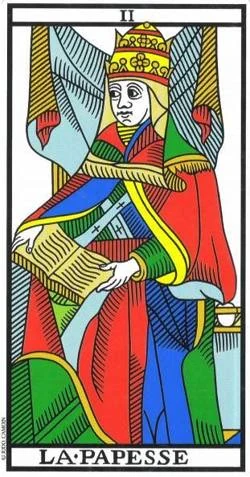
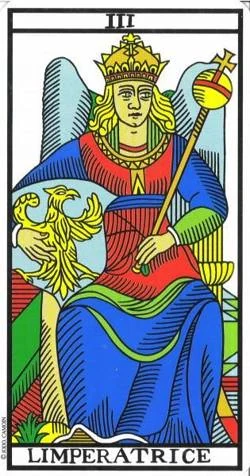
Before the Rider-Waite tarot was born, for 400 years there was only one tarot that truly mattered: the one from Marseille. Born in the 17th and 18th centuries in the print shops of the southern French port city, the Marseille tarot is the grandfather of nearly all Western tarot traditions. It is rawer, more abstract and harder to learn — and precisely for that reason many readers regard it as the deepest deck of all. This app reads with the classic Marseille deck and an AI that understands its strict reading tradition.

What separates Marseille from modern decks

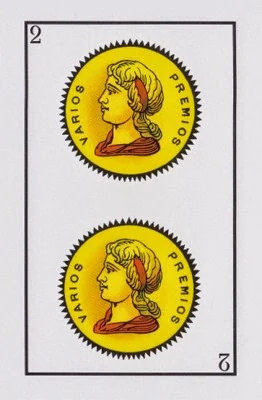
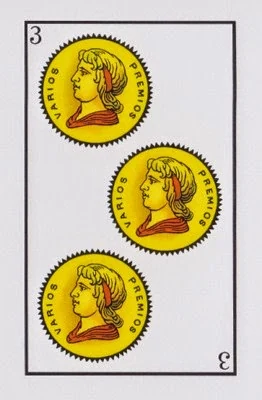
The decisive difference: in the Marseille deck, the Minor Arcana are not figurative. The Three of Wands is three crossed wands in a geometric arrangement — no person, no scene. The Six of Swords is a pattern of six swords, no boat, no traveler. This abstraction forces strict application of numerology (what does the Three mean within the Wands family?) and elemental logic (what does the Wand element say about this card?).

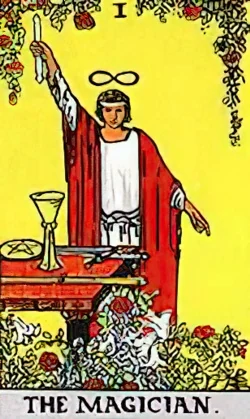
Anyone arriving from the Rider-Waite first feels Marseille as inaccessible: no images that meet you halfway, no intuitive "picture book" reading. The compensation: Marseille forces clean methodology. It is the deck of the mature reader — Alejandro Jodorowsky, Yoav Ben-Dov, Camelia Elias build their entire practice around it. This app uses AI to give beginners access to that strict tradition as well.

Three reading techniques that only work with Marseille

First: the numerological sequence. In Marseille, the number on the card counts more than its image. Aces are beginnings (raw energy), Twos are polarities, Threes are first manifestations, Fours are stabilizations, and so on through Ten (completion of the cycle). This scheme overlays with the element of the suit — a Four of Pentacles is materially-stabilized, a Four of Swords is mentally-stabilized. Internalize this grid and Marseille reads fluidly.

Second: the directionality of the images. Marseille cards often show figures looking in a particular direction — and it matters whether the neighboring card in the spread "looks" the same way or the opposite. Third: the color coding (in the sense of coloration). Specific Marseille printers — Conver, Camoin, Dodal — colored the cards slightly differently, and these nuances are read as meaning-bearing in modern practice. The app uses the Camoin-Conver deck as standard.

When you read Marseille for the first time

FAQ

Which Marseille deck is "authentic"?
Several historical versions are all considered legitimate: Conver 1760 (most often reproduced), Dodal 1701 (older, more characterful), Noblet 1650 (the earliest complete one). Camoin published a modern restoration of the Conver that today functions as the standard. There is no "wrong" Marseille — the tradition is plural. Our app uses a modern restoration of the Conver.
Why did Jodorowsky make the Marseille tarot well-known?
Alejandro Jodorowsky — film director, writer, therapist — developed a systematic rediscovery of the Marseille tarot together with Philippe Camoin from the 1980s onward. His book "La Voie du Tarot" (2004) is regarded as the modern standard reference. His approach: tarot not as fortune-telling but as a psycho-magical tool for self-analysis — what he called Psychomagic. Much of today's Marseille renaissance traces back to his teaching.
Should I start with Rider-Waite or with Marseille?
With Rider-Waite, almost always. The figurative imagery is more accessible, reading gets going faster, the reward is immediate. Switch to Marseille when a) you have read Rider-Waite for six months and feel you are often following the same card meanings, b) you want to bring more rigor into your practice, or c) you are starting to take an interest in the historical tradition of tarot. Marseille is no beginner deck, but it is a rewarding second.
Does AI reading work as well with Marseille as with Rider-Waite?
Differently, but well. The AI is trained on Marseille-specific reading methodology — it reads numerologically, elementally and directionally as the tradition requires. What the AI does less well than a human Marseille reader: sitting in silence with an image until it begins to speak. That is the meditative dimension of Marseille that an algorithm cannot replace. But as a methodical first analysis of a reading, the AI is quite precise.
What does Marseille say about love or career?
Marseille is not thematically differentiated like Rider-Waite — it reads every question through the same numerological-elemental lens. A love question and a career question are handled with the same methods, only the suits tend in different directions (Cups for love, Pentacles for career). If you want to ask targeted love or career questions, love tarot or career tarot with Rider-Waite is often more direct; Marseille is more universal, less thematic.

Related