Gypsy Tarot

Discover the secrets of the 36 mystical cards

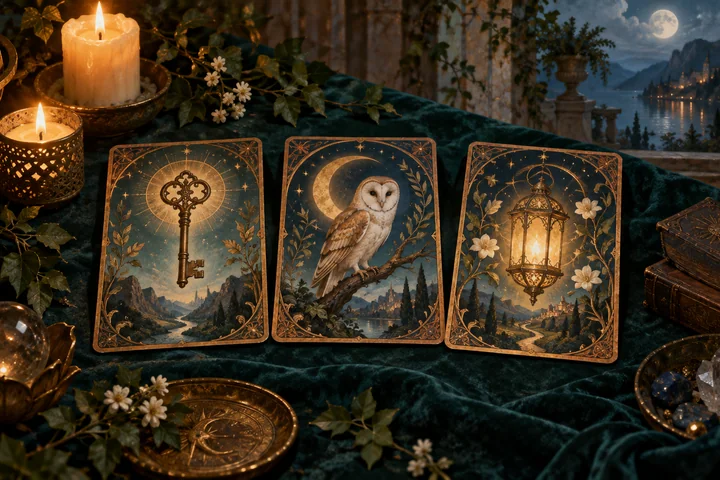
Select 3 cards that call to you

0 / 3

The cards reveal your destiny…

Try Gypsy Tarot now for free. Online reading with AI interpretation in seconds, no signup required.

The Gypsy Tarot emerged in the 19th century from the wandering cartomancy tradition of Central and Eastern Europe — a blend of German Lenormand, Russian peasant wisdom and Romani symbolism. With 36 cards it works similarly to the Lenormand, but has a completely different visual world: more dramatic, more narrative, often with human scenes instead of Biedermeier objects. This app reads with the classic Gypsy deck and AI interpretation.

A many-layered tradition

The term "Gypsy Tarot" is contested today — the word Gypsy itself is regarded by many as problematic. Historically it describes the cartomantic tradition of the Roma and Sinti communities, who travelled through Europe from the 17th century onward and practiced fortune-telling as a legitimate profession. In the 19th century concrete decks crystallized from it — usually 36 cards with narrative scenes: a traveler with a bundle, a woman in love at the window, a horseman in full gallop.

The Roma tradition itself often worked with improvised decks or with local playing cards repurposed for divination. The printed "Gypsy Tarot" you can buy today is a 19th-century bourgeois construction that romanticizes this tradition and packages it for commerce. It is therefore more inspired by outsiders than authentically Romani — valuable, but to be read in context.

Images that tell stories

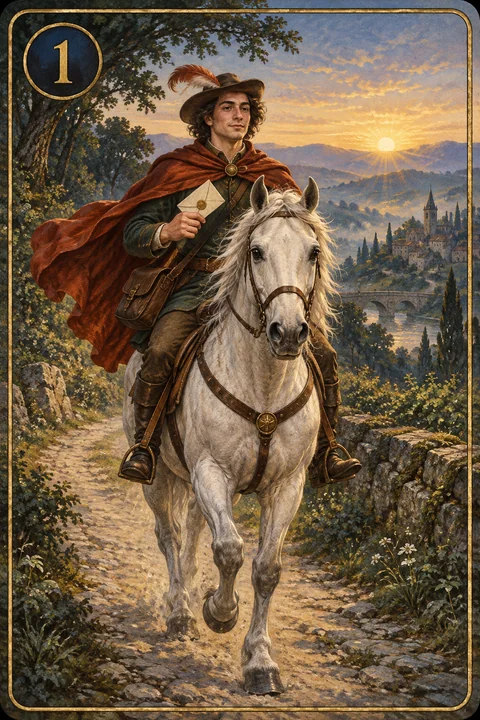
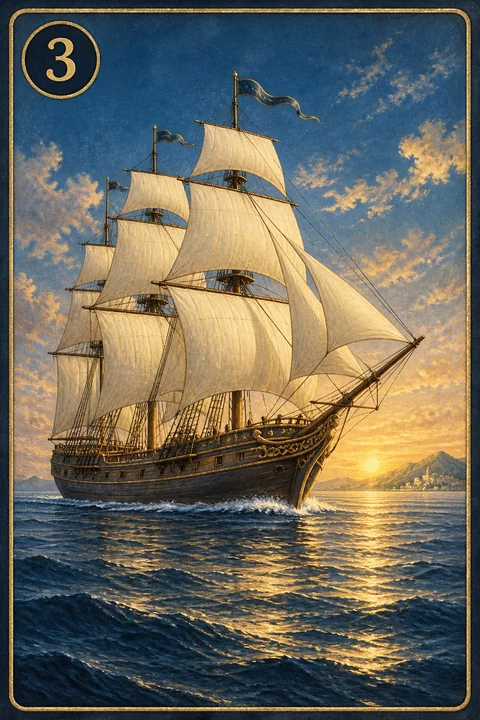
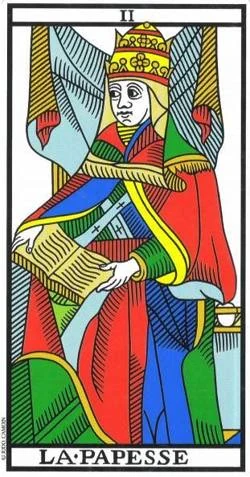
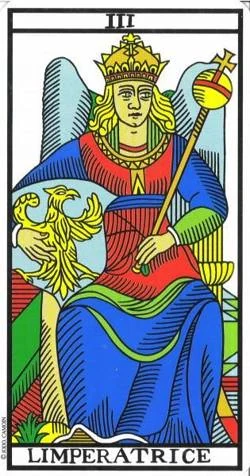
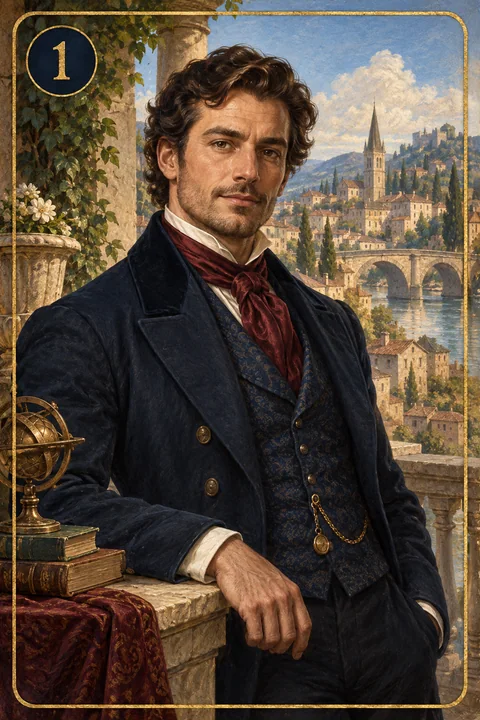
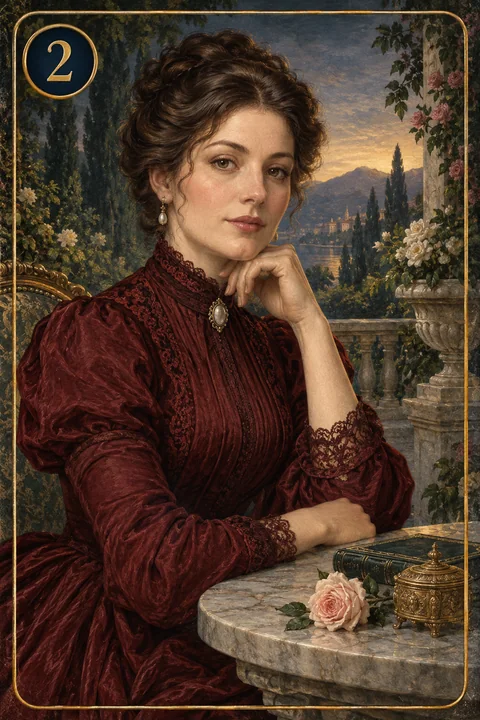
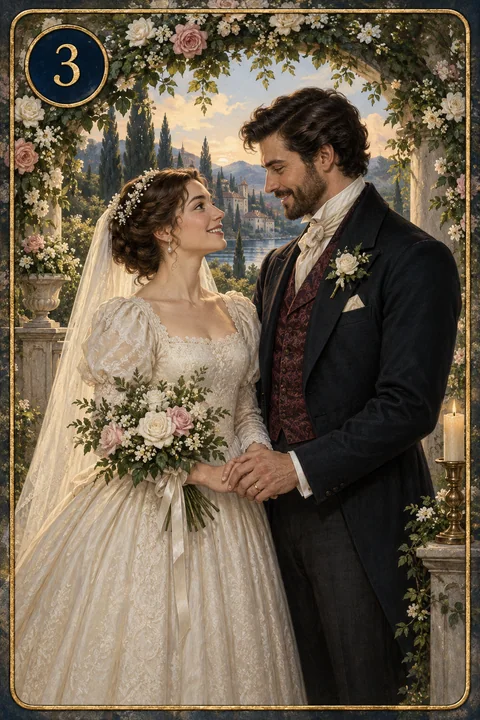
The 36 cards typically show dramatic life scenes: The Traveler, The Lovers, The Rich Man, The Jealous One, Death, The Thief, The Priest, The Child. Unlike the Lenormand (Anchor, Ship, Letter — abstract-bourgeois), the Gypsy Tarot is human and scenic. Each card is a small folk story.

The reading method resembles Lenormand: you read in combinations, not in isolated symbols. But the mood is different — Gypsy Tarot readings tend toward more dramatic, often more fateful statements. Where the Lenormand says "a sudden message", the Gypsy Tarot says "a dark letter that revives an old love". That is a matter of taste; some appreciate the directness, others the dramatic touch.

Read with awareness and respect

FAQ

Is the Gypsy Tarot the same as the <a href="/orakel/das-zigeunerdeck">Gypsy Deck</a>?
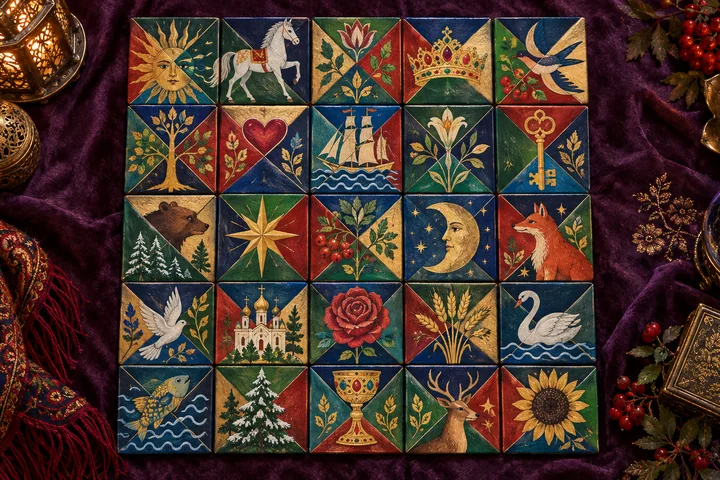
Not quite. Both are 36-card decks from the same tradition, but they are laid out differently. The Gypsy Tarot of this app is a classic cartomantic deck with scenic images, laid in linear spreads (3, 5 or 9 cards). The Gypsy Deck in our oracle section uses a different visualization — a 5x5 tableau with cross-connecting links, more a contemplative practice than a quick question-and-answer. Both are valid; the choice depends on the reading style.
Does the deck really come from Roma fortune-tellers?
Indirectly. The tradition of cartomantic divination was alive in Romani communities, but the printed decks bearing the name "Gypsy Tarot" are products of the 19th-century German, Austrian and French middle class. They are a romanticizing homage, not authentic heritage. Authentic Roma divination often used ad-hoc decks (playing cards, sometimes hand-painted cards) and varied widely between families and regions.
Should I choose Gypsy Tarot or Lenormand?
Both use 36 cards and combinatorial reading — the difference is the imagery. The Lenormand is Biedermeier (Anchor, Book, Ship, Garden — objects), the Gypsy Tarot is human and narrative (Traveler, Lovers, Priest — people). If you prefer to read more analytically and factually, Lenormand is clearer. If you think in stories and characters, the Gypsy Tarot is more intuitive.
How did the famous "Gypsy readings" of traveling fortune-tellers actually unfold?
Oral reports and folk literature (Pushkin, Morike, Garcia Lorca wrote about them) suggest: often very theatrical, with a ritual greeting, intense focus on the other person, reading the face and palm in addition to cards. The fortune-teller used the cards as a support for an intuitive read of the person — the cards alone were never the whole process. A modern AI reading is a technical simplification of that complex practice. It works, but it is shorter and less ritualized than the tradition.
Can I combine Gypsy Tarot with other decks?
Cautiously, yes. Some practitioners draw a "main card" from a 78-card tarot (Rider-Waite or Marseille) and then lay a 36-card tableau (Gypsy or Lenormand) around it as a detailed reading. That works because the two systems have different resolutions — the large deck shows the theme, the small deck the concretion. For beginners, 36 cards on their own are enough to start with.

Related