Shell Oracle

The Oracle of the Seas

🐚

Since time immemorial, coastal shamans have read destiny in the shells the sea casts upon the shore. Each spiral holds the ocean's whisper, each shell carries the will of the tides engraved within. Focus your mind, form your inner question, and let the sea speak.

Focus your mind on a question. When you are ready, cast the shells into the sea.

Try Shell Casting now for free. Online reading with AI interpretation in seconds, no signup required.

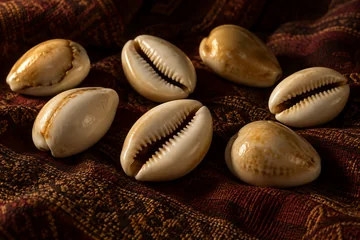
The shell oracle or caracolomancia is the African divinatory practice with cowrie shells — small, whitish glossy snail-shell forms that served for centuries in West Africa as currency and as oracle. Through the slave trade, the practice came to the Caribbean and Brazil, where it became integral to Santeria, Candomble and other Afro-American religions. This app delivers an accessible adaptation.

Yoruba tradition meets African diaspora knowledge

In Yoruba land (today's Nigeria, Benin), erindinlogun or diloggun — divination with 16 cowrie shells — is one of the most important priestly practices. The babalawos and iyalochas (priests) of the Orishas (gods) use it for counsel, for diagnosis, for determining rituals. From the 16th to the 19th century it was carried via enslaved Yoruba to Cuba, Brazil and Haiti — and survived the plantation culture that destroyed so much.

Today, caracolomancia is alive in Latin American folk practice — a tool passed on above all by women, often with an Afro-Catholic synthesis (Santeria links Yoruba Orishas with Catholic saints). The app delivers a simplification that respects the tradition without claiming its ritual core.

How 16 shells give an answer

The method in simplified form: 16 cowrie shells are thrown, and the count is taken of how many lie with the opening upward. That number (between 0 and 16) is the answer-number — an odu in the Yoruba language. Each odu is connected with one or more Orishas and has its own story, lesson, recommendation.

In the full tradition there are 16 main odu, each with extensive stories and sub-variants — a babalawo learns for years to know all the odu by heart. The principal odu: Okana (beginning, being alone), Eyioko (brotherhood, relationship), Ogunda (conflict, separation), Iroso (eye disease or beautiful sight — a double meaning), Oche (money, matter), Obara (king or lie), Odi (hole, trap or pregnancy), Eyeunle (head, wisdom) and others. The app names the matching odu and its main meaning.

Respectful use

  • Be aware that this is a living religious practice. Unlike European folk divinations, caracolomancia is today active religious practice in Santeria, Candomble and other Afro-American religions. The app variant is a respectful simplification — it does not replace the babalawo, who reads after years of initiation and study.
  • Ask substantial questions. Caracolomancia is not for "should I wear the blue sweater today". It is traditionally used for serious life questions: marriage, health, major decisions, spiritual diagnosis.
  • Accept the answer. The African-Caribbean tradition is very clear: what the shells say is accepted. Whoever throws the same question multiple times until the desired result comes up is not taken seriously in the tradition.
  • Learn more if the tradition really speaks to you. If caracolomancia interests you more deeply, look for books by Migene Gonzalez-Wippler or direct contact with a Santeria or Candomble community. The app is an entry point, not an end point.

FAQ

Is using this app cultural appropriation?
A fair question. Caracolomancia is a specific, religiously rooted practice of African-American diaspora religions. A respectful engagement — app reading with awareness of the tradition, without claiming the ritual or priestly functions — is regarded by many practitioners as unproblematic. What is criticized as appropriation: wearing ritual garments, claiming initiation status, commercial use of the symbolism without cultural connection. This app avoids all three.
Do real cowrie shells work better than the digital variant?
In religious practice yes — the shells are "consecrated" in initiation rituals, connect with the Orisha of the reader, gather their own energy over the years. The app variant has none of these layers — it is statistically fair but spiritually "empty". Whoever just seeks an answer can get it digitally too. Whoever wants to enter the tradition should seek real shells (available in Afro-Caribbean botanicas) and a culturally grounded teacher.
What relation do the odu have to the Orishas?
In the Yoruba tradition, each odu has one or more protector Orishas whose energy it represents. Eyeunle (8) is connected with Obatala (Father of Wisdom), Oche (5) with Oshun (love and freshwater), Ogunda (3) with Ogun (iron, war, work). Whoever throws a particular odu receives not only a reading, but also a hint as to which Orisha is currently at work in your life — or to whom you should turn.
How does caracolomancia differ from <a href="/orakel/i-ging-orakel">I Ching</a>?
Both use a finite set of symbolic outcomes (16 odu vs. 64 hexagrams), both have centuries-old tradition with initiation and priestly reading. Differences: the I Ching is textual-philosophical (Wilhelm translation), caracolomancia is oral-narrative (each odu is a story). The I Ching is secularizable (you can read it without religious belief), caracolomancia is more closely connected with its religion. Both are serious divinatory tools.

Related