The Viking Runes are the oldest writing of Northern Europe — and at the same time one of the oldest divinatory systems on the continent. The Elder Futhark with 24 runes was for the Vikings writing, magic and oracle in one. This app draws one, three or five runes for your question and delivers the AI reading in the spirit of the Norse tradition.
Writing, magic and oracle in one
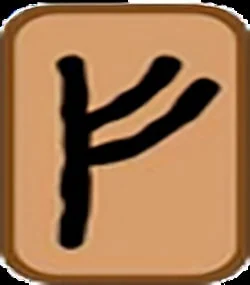
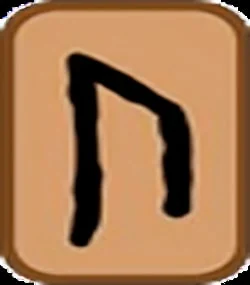
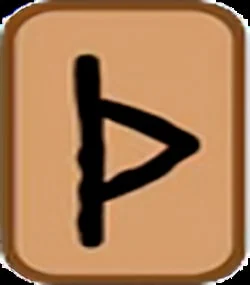
The Elder Futhark emerged around the 2nd century CE in Scandinavian and Germanic tribal areas. It has 24 runes, each with a name (Fehu = cattle/wealth, Uruz = aurochs/strength, Thurisaz = giant/protection...) and its own symbolic meaning. Unlike the Latin alphabet, which only represents sounds, runes are polyphonic signs: sound, image, concept, magical symbol — all at once.
The divinatory practice is documented in the Germanic cultural area since Tacitus (Germania, ca. 98 CE) — he describes how Germanic tribes threw rune sticks and read three of them as the answer. Today's rune divination builds on this tradition, supplemented by modern revival research (Edred Thorsson, Stephen Flowers). The app uses the classical 24-rune Futhark.
Three Aetts, three life areas
The 24 runes are divided into three groups of 8 runes each — the Aetts. Each Aett carries its own main theme. Freyr's Aett (runes 1-8: Fehu, Uruz, Thurisaz, Ansuz, Raidho, Kenaz, Gebo, Wunjo) — creation, beginnings, material manifestation. Hagal's Aett (runes 9-16: Hagalaz, Nauthiz, Isa, Jera, Eihwaz, Perthro, Algiz, Sowilo) — challenge, crisis, transformation, protection.
Tyr's Aett (runes 17-24: Tiwaz, Berkana, Ehwaz, Mannaz, Laguz, Ingwaz, Dagaz, Othala) — social structure, relationships, inheritance, completion. When your reading brings several runes from the same Aett, the main theme of that Aett dominates. When the runes are spread evenly across all three Aetts, the question is a holistic life one. This structure makes rune reading a multidimensional practice.
Working seriously with the runes
- Learn the individual runes first, then the spreads. Before attempting complex readings, learn the 24 runes individually — name, symbol, main meaning. The accessible standard literature is Edred Thorsson's "Futhark" (1984).
- Use reversed runes with care. Unlike in tarot, "reversed" rune reading is contested. Some schools read it as a weakening of the main meaning, others ignore it. Since symmetrical runes (e.g. Gebo X, Isa I) cannot meaningfully be reversed, the consistency is questionable. For beginners we recommend reading all runes upright.
- Watch for the question "Which Aett dominates?" That is a quick diagnosis of the reading. Three Hagal's Aett runes in a reading point to a crisis question; three Freyr's Aett runes to a creation/building question; three Tyr's Aett runes to a relationship/structure question.
- Accept Norse directness. Rune readings are often brutally direct — no soft veilings as some tarot readings have. The Norse tradition speaks plainly. Whoever cannot bear that is better off with the Rider-Waite tarot or the Blue Oracle.
FAQ
Are these real Viking runes or a modern invention?
The Elder Futhark is historically authentic — inscriptions on stones, weapons, jewelry are documented from the 2nd to 8th centuries. What is contested is the claim that the Vikings used the Futhark as a divinatory oracle. Tacitus describes the practice among Germanic tribes before the Viking Age (ca. 98 CE); whether the later Vikings continued it or developed their own practices is not clear. Today's divinatory tradition is a mixture of historical research and modern revival (the rebirth of Germanic paganism).
What is the difference between Elder and Younger Futhark?
The Elder Futhark (24 runes, 2nd-8th c.) was the old Germanic-Scandinavian writing system. In the 8th century it was reduced in Scandinavia to the Younger Futhark (16 runes) — the Viking runes in the strict sense. In England the Anglo-Saxon Futhorc (28-33 runes) developed. Today's divinatory oracles mostly use the Elder Futhark with 24 runes, because it is symbolically richer and more complete. The app follows that convention.
What does the "blank rune" (Wyrd rune) mean?
The blank rune (also "Odin's rune") is not a historical rune — it was invented in 1982 by Ralph Blum in his book The Book of Runes, as a symbol of the unknown fate (Wyrd). Traditional rune masters reject it. Some modern sets contain it as a 25th stone; others consistently do not. This app uses the classical 24-stone set without the Wyrd rune.
How do runes differ from <a href="/tarot/rider-waite-tarot-antwortet">tarot</a>?
Symbolically and culturally very different. Tarot is Mediterranean-hermetic (Italy, 15th century, later infused with Kabbalah), runes are Norse-Germanic (Scandinavia, 2nd century, pagan). Methodically: tarot has 78 cards with narrative imagery, runes have 24 symbols of minimalist geometry. Tarot is narrative, runes are elemental. Whoever reads contemplatively-meditatively prefers runes; whoever thinks narratively-pictorially prefers tarot.
Related